Udacity Design Sprint | 2019
Designing a Mobile Coverage Coordination App Under Time Constraints
Overview
Super Cover was a fictional mobile application concept developed during a timed UX design sprint. The project focused on demonstrating structured research, rapid ideation, and end-to-end product thinking within constrained timelines.
The goal was to design an intuitive mobile experience that allowed union members to request and coordinate shift coverage efficiently, reducing manual communication and scheduling friction.
The Challenge
Union members relied on informal, manual coordination to secure coverage for time off. This created:
Delays in communication
Uneven distribution of coverage responsibilities
Stress around time-off planning
Lack of visibility into availability
The opportunity was to design a mobile-first system that simplified coordination while remaining accessible to users with varying technical experience.
Scope of Ownership
Conducted user interviews and synthesized findings
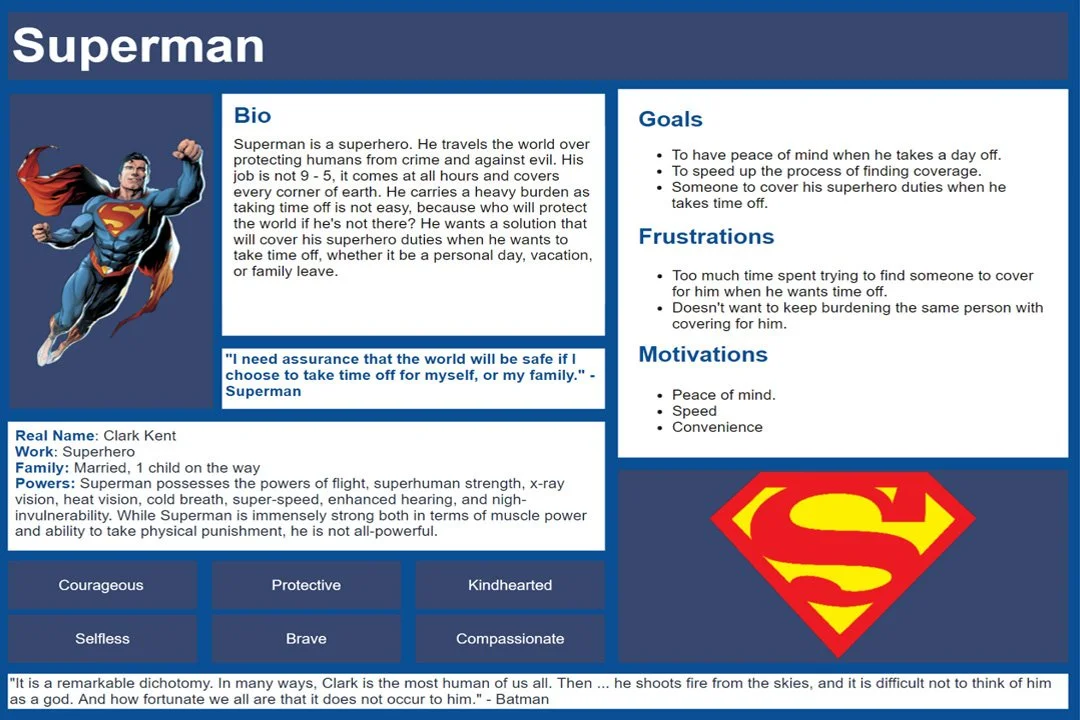
Created personas and empathy maps
Defined feature matrix and core functionality
Designed end-to-end user flow
Developed low-fidelity wireframes
Delivered high-fidelity mobile interface prototypes
This project was completed within a timed sprint environment to demonstrate research, prioritization, and design decision-making.
Research & Synthesis
Research began with structured brainstorming to define constraints and context, followed by user interviews to validate assumptions.
Methods included:
User interviews
Persona development
Empathy mapping
Feature prioritization matrix
Research revealed key themes:
Coverage coordination was manual and time-consuming
Users needed quick visibility into availability
Stress increased when coverage was uncertain
Simplicity was critical for adoption
These insights shaped both the feature set and interaction design decisions.
Product Strategy & Core Decisions
The product was designed to:
Enable fast coverage requests
Minimize steps to secure confirmation
Provide visibility into availability
Reduce reliance on repeated informal communication
Design decisions prioritized clarity, speed, and mobile-first accessibility.
Information Architecture & Flow
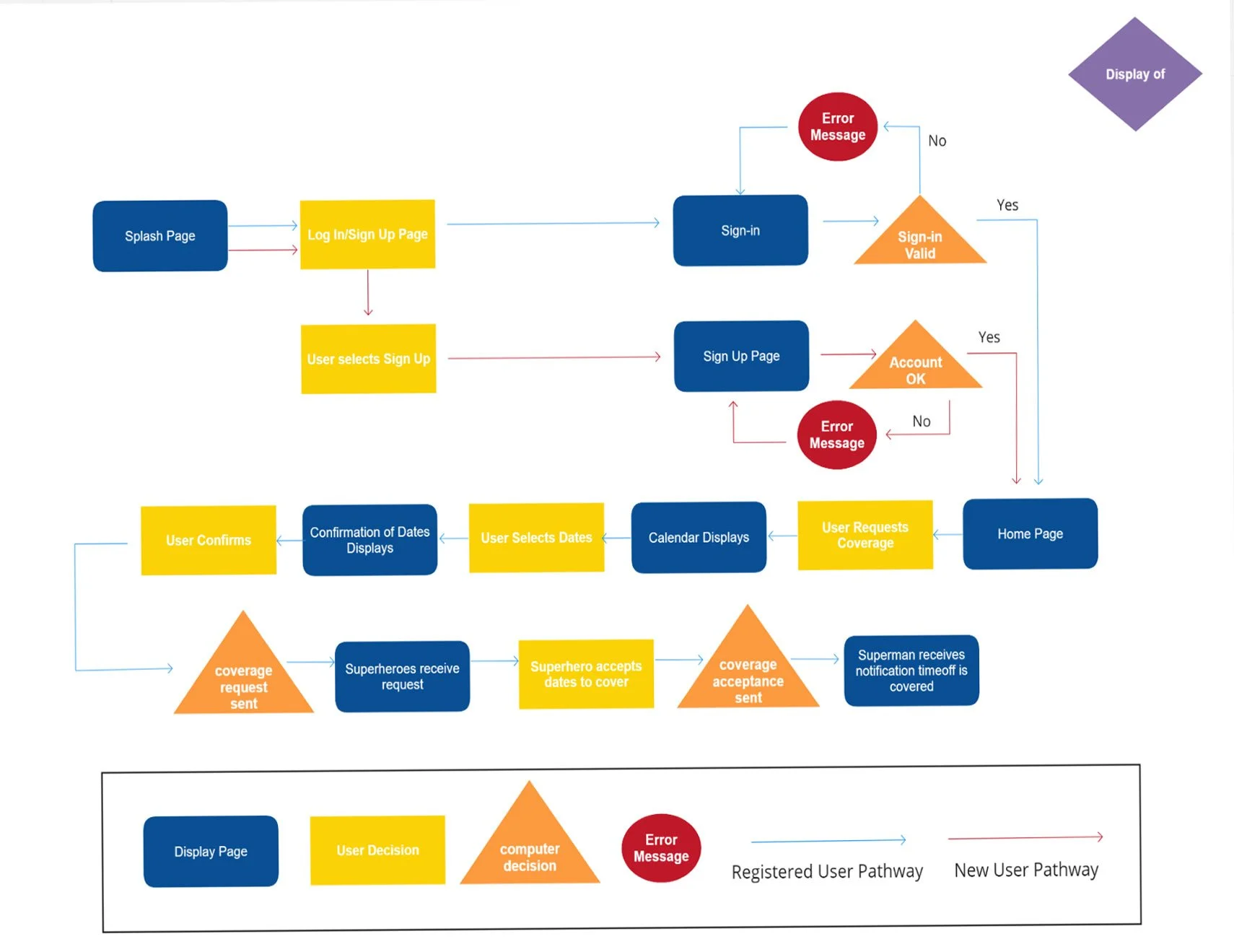
An end-to-end user flow mapped the experience from login through coverage confirmation.
Key considerations included:
Clear entry point for new requests
Streamlined approval and notification system
Predictable navigation patterns
Minimal cognitive load
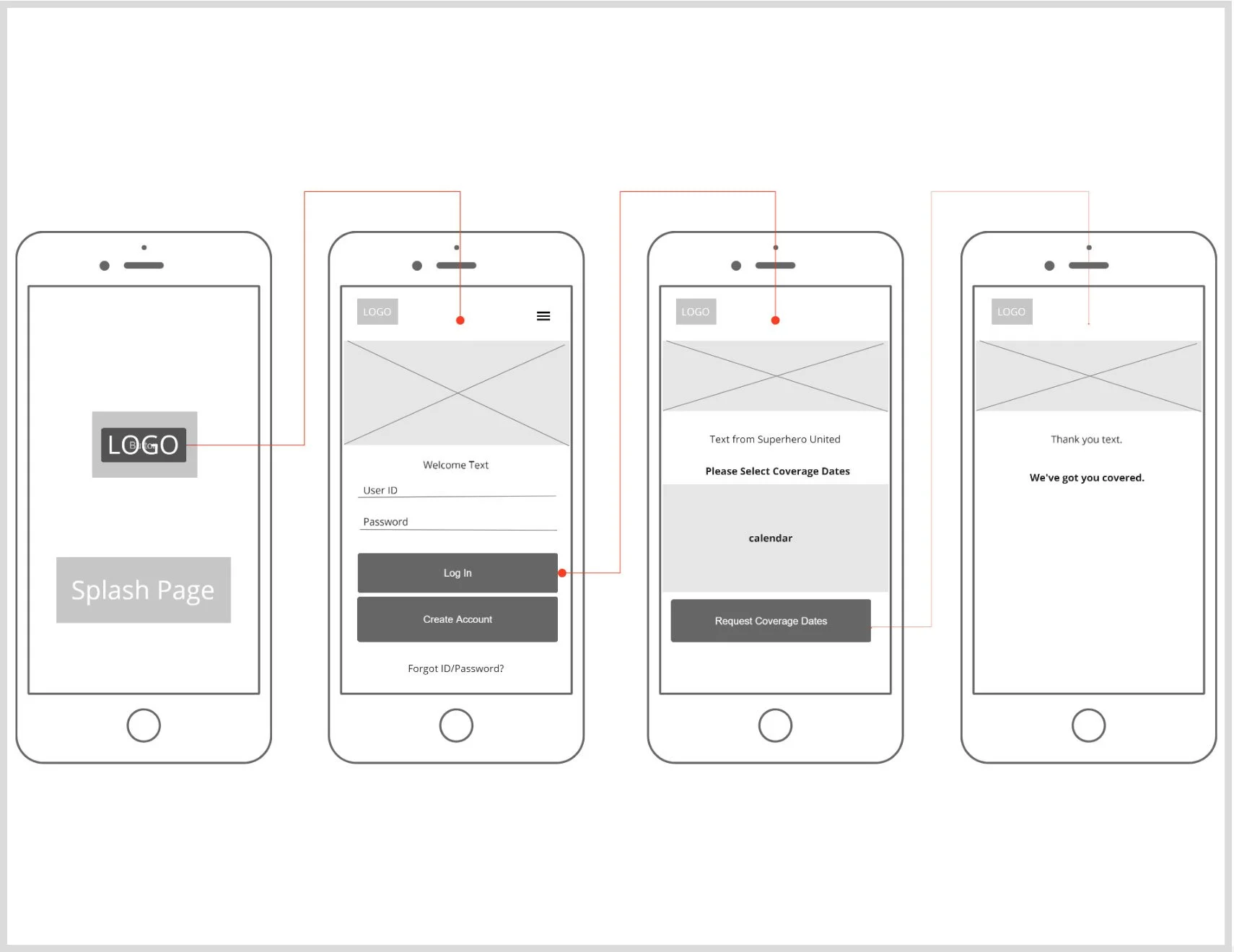
User flows were translated into structured wireframes to validate hierarchy and progression before visual refinement.
Wireframing & Interface Design
Low-fidelity wireframes established layout structure and interaction logic.
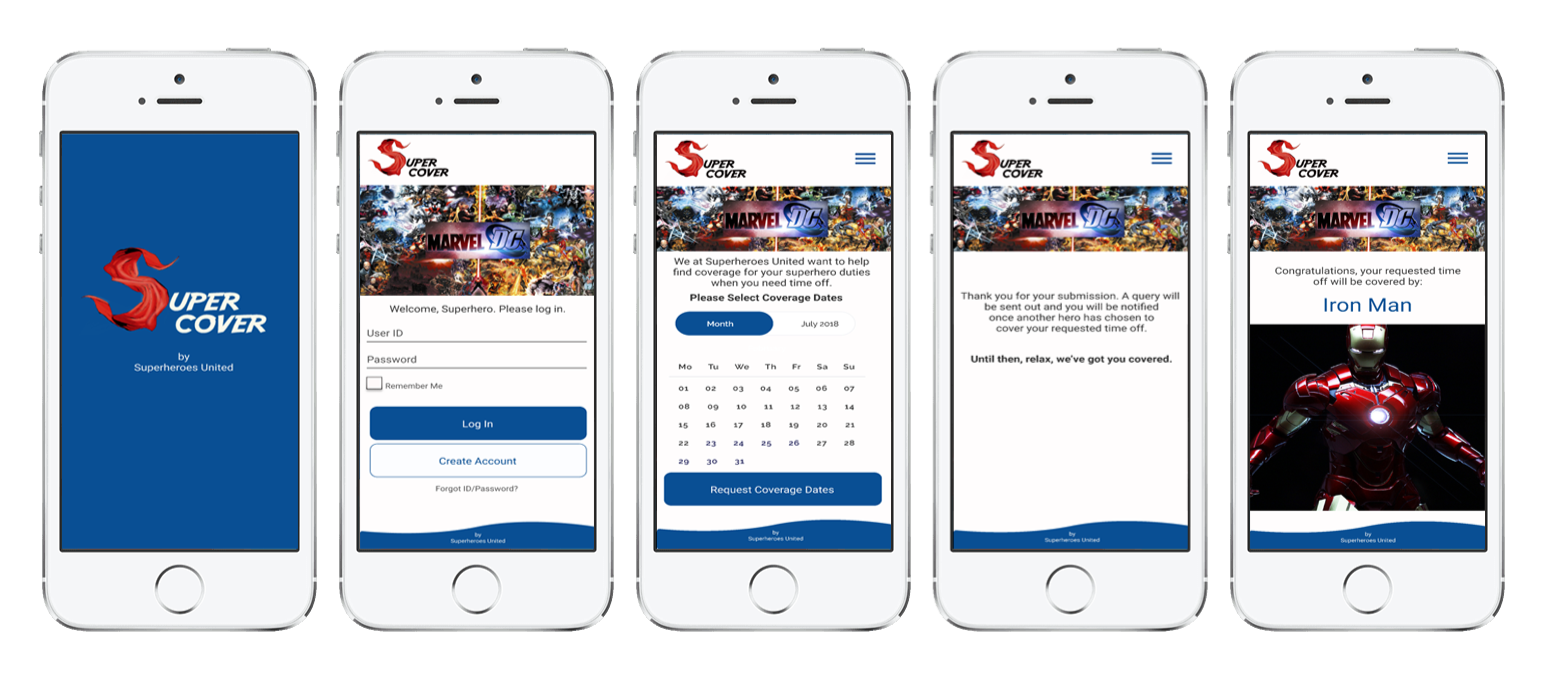
High-fidelity prototypes were developed to:
Reinforce hierarchy
Simplify task completion
Establish visual clarity
Maintain intuitive mobile navigation patterns
Due to sprint time constraints, the full application was not built out, but core flows and representative screens were completed.
Outcomes & Learning
Demonstrated structured UX process under time constraints
Validated ability to translate research into user flows and prototypes
Reinforced importance of simplifying multi-step coordination workflows
Showcased end-to-end product thinking from research through visual design
While conceptual, this sprint project illustrates foundational UX skills in research synthesis, prioritization, and rapid prototyping.