Election Systems & Software (ES&S) | 2022-2023
Modernizing Enterprise Election Software Through System-Level UX Governance
Overview
Led a cross-platform UX modernization initiative establishing a unified, WCAG-aligned design foundation across three enterprise voting software platforms: ExpressPoll Connect, Voter Registration, and Electionware. The effort focused on improving accessibility, visual consistency, and long-term scalability within highly regulated, task-driven environments.
While full navigation and layout redesign was executed for ExpressPoll Connect, the broader initiative established design system standards and governance adopted across all three platforms.
The Challenge
Each platform had evolved independently over time, resulting in:
Fragmented visual styles
Inconsistent component patterns
Accessibility gaps failing WCAG contrast requirements
Uneven hierarchy and interaction behaviors
The core issue was systemic misalignment rather than isolated UI defects. Addressing these gaps required foundational standardization, not surface-level redesign.
Scope of Ownership
Platform Governance & Design Foundations (All Three Products)
Defined cross-platform UX standards and visual system governance
Established WCAG-compliant color system and typography hierarchy
Built scalable component library for reuse across platforms
Created layout frameworks reinforcing hierarchy and task clarity
Partnered with engineering to guide phased implementation
Full Redesign Execution (ExpressPoll Connect)
Led complete navigation and information architecture redesign
Designed new layouts aligned with updated system standards
Produced production-ready UI specifications
Guided implementation and refinement within Agile workflows
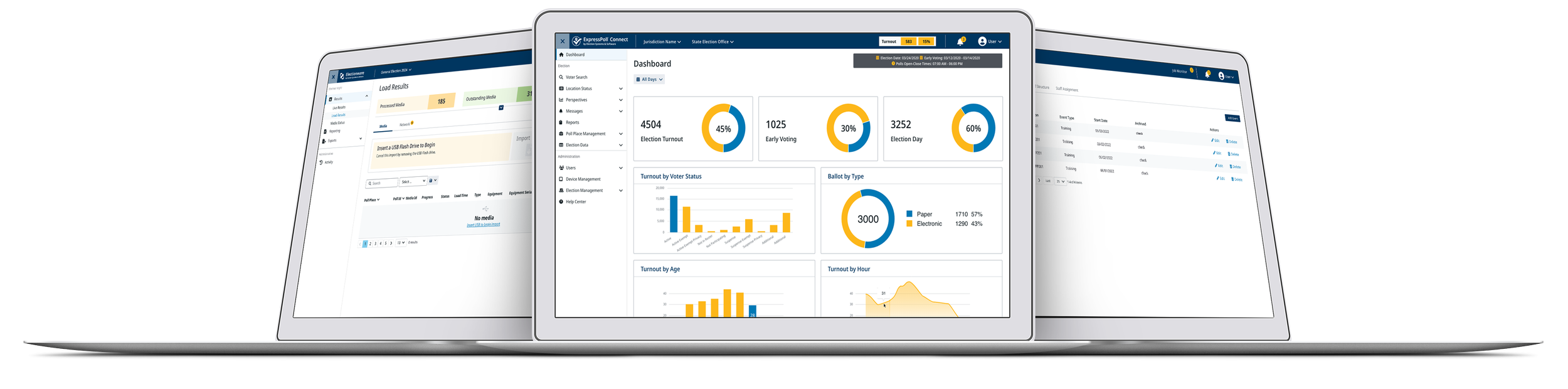
Due to the proprietary nature of this work, wireframes and screenshots of the full design process cannot be publicly displayed.
Research & System Audit
Conducted comprehensive UI and accessibility audits across all three platforms, evaluating:
Color contrast and token application
Typography readability and hierarchy
Component consistency and interaction states
Navigation structures and workflow clarity
Information architecture alignment with user tasks
Findings confirmed systemic fragmentation requiring architectural alignment and design system standardization.
Accessibility-First Strategy
Accessibility was embedded at the foundation rather than retrofitted at the screen level.
The initiative established:
A contrast-compliant, brand-aligned color system
Accessible typography hierarchy for complex workflows
Standardized interactive states (focus, hover, error, disabled)
Predictable navigation patterns
Reusable component behaviors
This approach ensured scalable WCAG alignment and reduced long-term compliance risk.
Design System & Governance Foundations
To support long-term consistency across products, I established:
Centralized UI standards documentation
Scalable component definitions
Cross-platform layout system
Governance guidelines for future feature development
These foundations created a single source of truth supporting maintainability and phased adoption across enterprise platforms.
Constraints & Tradeoffs
The modernization effort operated within meaningful constraints:
Legacy workflows requiring familiarity preservation
Certification and regulatory timelines limiting disruption
Brand standards requiring refinement rather than replacement
Technical limitations requiring incremental rollout
Design decisions balanced usability gains with stability and compliance needs.
Outcomes & Impact
Unified three enterprise platforms under a cohesive UI system
Established a WCAG-aligned accessibility foundation at scale
Reduced cognitive load through consistent hierarchy and navigation
Improved cross-platform maintainability and scalability
Formalized long-term UX governance and design standards
This initiative transformed fragmented interfaces into a structured, accessible, and scalable system supporting both current workflows and future product growth.